
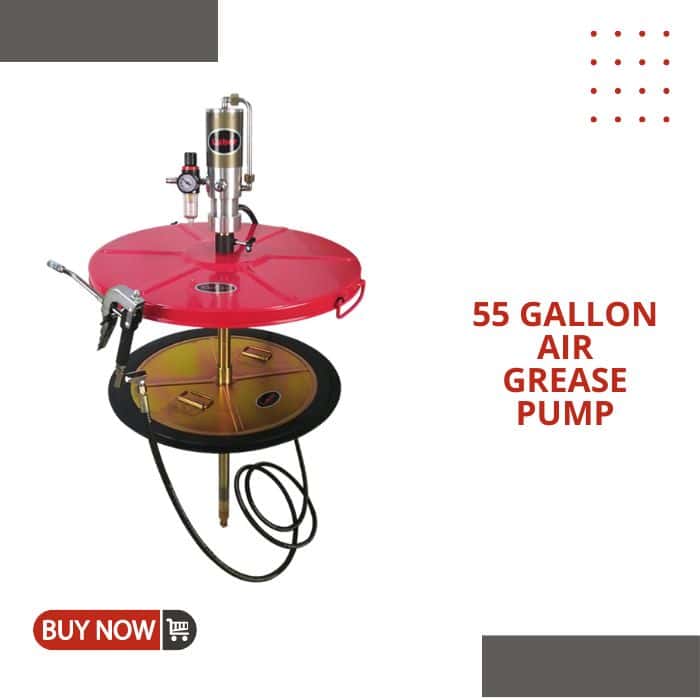
Air-Operated Grease Pump – Pneumatic 55-Gallon Drum Lubrication System
$ 97.63
Overview Air-Operated Grease Pump is a pneumatic lubrication system designed for 55-gallon (400 lb) drums, converting low-pressure compressed air into high-pressure grease delivery through a hydraulic force amplification mechanism. The pump mounts directly to the drum lid via a bung adapter, with a follower plate maintaining constant contact pressure on the grease surface to prevent cavitation and air ingestion at the intake tube. Available in 50:1 and 58:1 pressure ratios, these pumps deliver output pressures up to 8,700 PSI—sufficient to force thick NLGI Grade 2 and Grade 3 greases through long hose runs, metered divider valves, and high-resistance fittings. The system requires no electrical power, making it suitable for explosion-risk environments, mobile fleet bays, and outdoor maintenance facilities where electrical codes restrict powered equipment. We supply pump-only units for integration into existing hose reel systems, as well as complete kit configurations including drum trolley, follower plate, air filter/regulator, high-pressure hose reel, and grease control gun. How the Pressure Ratio Works The core operating principle is hydraulic force amplification achieved by the differential cross-sectional area between the air piston and the grease plunger. A large-bore air piston acting on a small-diameter plunger produces proportional pressure gain with no external power source beyond the compressor. Output Pressure (PSI) = Air Supply PSI × Pump Ratio Air Supply 50:1 Pump Output 58:1 Pump Output 60 PSI 3,000 PSI 3,480 PSI 90 PSI 4,500 PSI 5,220 PSI 120 PSI 6,000 PSI 6,960 PSI 150 PSI 7,500 PSI 8,700 PSI System Configurations Pump-Only Unit The pump head assembly with bung adapter for direct mounting to a 55-gallon drum. Includes the air motor, grease plunger, inlet check valve, and discharge port. Designed for facilities integrating into existing hose reel and dispensing gun systems. Features a springless air motor to eliminate spring-fatigue failure, pre-lubricated motor requiring no in-line air oiler, and nitride-hardened steel plunger and bushings for extended wear life in abrasive-particle grease environments. Complete System Kit Includes the pump head plus all downstream components required for immediate operation: 4-wheel drum trolley for mobility Drum-matched follower plate Integrated air filter/regulator for moisture and particulate removal Heavy-duty grease control valve (deadman-style) 30 ft (9.1 m) high-pressure hose reel The integrated air filter/regulator is critical for longevity: unfiltered compressed air carrying moisture causes corrosion of the air motor’s aluminum bore and steel valve components, accelerating wear rates substantially. High-Output Continuous-Duty System Designed for high-volume service bays, fleet maintenance facilities, and centralized lubrication systems with multiple dispensing points running simultaneously. Features precision-ground bores, hardened-alloy check valve seats, and a rebuildable motor section with standard service kits. Suitable for continuous operation where standard pumps are rated for intermittent use only. Technical Specifications Parameter 50:1 Standard 58:1 High-Output Pump Ratio 50:1 58:1 Max Output Pressure 7,500 PSI (517 bar) 8,700 PSI (600 bar) Air Supply Range 30–150 PSI (2–10 bar) 60–150 PSI (4–10 bar) Flow Rate 80 cu in/min (1,310 cc/min) 13 lbs/min (~5.9 kg/min) Air Consumption 10–14 SCFM @ 100 PSI 14–24 SCFM @ 100 PSI Grease Compatibility NLGI Grade 2 (optimal); Grade 3 above 15°C NLGI Grade 2–3; cold-environment capable Drum Compatibility 400 lb / 55-gallon standard 400 lb / 55-gallon standard Duty Cycle Intermittent / Continuous (model dependent) Continuous Pump Action Single-acting or Double-acting Single-acting Key Engineering Features Springless Air Motor: Eliminates spring-fatigue failure—the most common failure mode in reciprocating pneumatic motors. Pre-Lubricated Motor: Requires no in-line air oiler, reducing maintenance variables and preventing oil contamination of the grease. Nitride-Hardened Plunger: Surface hardness of 60–70 HRC significantly extends wear life in abrasive grease environments containing solid lubricant particles. Double-Acting Option: Delivers grease on both upstroke and downstroke, producing more consistent flow with fewer pressure pulses compared to single-acting pumps. 360° Swivel Fitting: Eliminates hose torque stress at the connection point, preventing fitting fatigue failure and extending hose service life. Rebuildable Fluid Section: Motor and fluid sections are serviceable with standard seal kits, providing total cost of ownership advantage over non-serviceable designs. Critical Selection Parameters 1. Pressure Ratio vs. Grease Grade NLGI 2 grease flows reliably at 50:1 ratio output pressures under normal temperature conditions. NLGI 3 grease, or any grease below 10°C (50°F), exhibits significantly higher apparent viscosity. A 58:1 pump is strongly recommended for NLGI 3 applications, unheated facilities, or cold-climate environments to maintain stable flow and prevent motor stall under high back-pressure conditions. 2. Air Supply — Pressure vs. Volume Pressure (PSI) alone does not define compressor suitability. SCFM (Standard Cubic Feet per Minute) is the critical parameter. A pump requiring 10 SCFM at 100 PSI will cause an undersized compressor to run continuously without recovery—creating moisture accumulation in the air line and accelerated motor wear. Pump Type Min Air Pressure Typical SCFM Required 50:1 Standard 60 PSI 10–14 SCFM 58:1 High-Output 60 PSI 14–24 SCFM 3. Hose Pressure Rating All hose and fittings downstream of the pump must be rated at or above the pump’s maximum output pressure. A 50:1 pump at 150 PSI air generates 7,500 PSI at the discharge port. Standard hydraulic hoses rated at 3,000–5,000 PSI are not adequate. Use hose assemblies rated for a minimum of 10,000 PSI working pressure for appropriate safety margin. 4. Follower Plate Sealing The follower plate must match the drum’s internal diameter within ±2 mm. An oversized plate creates friction that resists descent; an undersized plate allows grease to bypass the plate edge, reducing effective pump pickup and leaving residual grease in the drum. Always verify drum ID before ordering replacement follower plates. 5. Single-Acting vs. Double-Acting Single-acting pumps pressurize on one stroke direction; double-acting pumps pressurize on both strokes. For systems using automated metering valves or centralized lubrication controllers sensitive to pressure fluctuation, double-acting pumps deliver a more consistent pressure waveform and are the preferred choice. Installation and Operation Compressor Sizing: For intermittent use, a 5 HP / 60-gallon tank compressor delivering at least 10 SCFM at 90 PSI is the practical minimum for 50:1 pumps. For continuous-duty or 58:1 high-output pumps, a 7.5–10 HP compressor capable of 14–24 SCFM sustained output is required. Air Filtration: Install a coalescing filter and regulator upstream of the pump. Moisture and particulate contamination are the leading causes of premature air motor failure. Priming: Prime the pump with the discharge open to atmosphere to purge air from the fluid section before connecting to the hose and gun. Failure to prime causes cavitation and dry-running wear. Hose Routing: Keep hose runs as short as practical. Every 10 ft of hose and every 90° fitting adds back-pressure that reduces working flow rate. For systems with more than 30 ft of hose or more than 8–10 dispensing points, the 58:1 high-output system is recommended. Torque Control: Do not exceed the air supply pressure rating. Over-pressurizing the air motor beyond 150 PSI does not increase grease output proportionally and accelerates seal wear. Applications Fleet Maintenance: Truck, bus, and heavy equipment chassis lubrication with multiple grease points per vehicle. Manufacturing Plants: Centralized lubrication systems feeding progressive or parallel divider valves for machine tool bearings, conveyors, and presses. Construction and Mining: Mobile equipment lubrication in field conditions where electrical power is unavailable. Food and Pharmaceutical: Food-grade grease dispensing for processing equipment where oil-free air motors are required. Wind Energy: Turbine gearbox and bearing lubrication with synthetic greases in remote locations. How to Order To receive an accurate quotation, please provide the following information: Pressure ratio: 50:1 or 58:1 Configuration: Pump-only or complete system kit Pump action: Single-acting or double-acting Grease grade: NLGI 2 or NLGI 3 Operating environment temperature range Air compressor specifications: HP, tank size, sustained SCFM at operating pressure Hose length required and number of dispensing points Duty cycle: Intermittent or continuous Required certifications: ATEX, food-grade, oil-free air motor Quantity and target delivery schedule Our engineering team will confirm compressor suitability, pump ratio selection, and hose pressure rating requirements, and provide a detailed quotation within 24 hours. Frequently Asked Questions What is the minimum compressor size required for a 55-gallon drum grease pump? For intermittent use, a 5 HP / 60-gallon tank compressor delivering at least 10 SCFM at 90 PSI is the practical minimum for 50:1 pumps. For continuous-duty or 58:1 high-output pumps, a 7.5–10 HP compressor capable of 14–24 SCFM sustained output is required. Undersized compressors will short-cycle constantly and introduce moisture into the air supply, accelerating motor corrosion and wear. Can these pumps handle NLGI 3 grease? 50:1 pumps can handle NLGI 3 grease at ambient temperatures above 15°C (60°F) with adequate air pressure, but performance degrades as temperature drops and grease stiffens. The 58:1 high-output pump is the recommended choice for NLGI 3 applications, particularly in unheated facilities or cold-climate environments where viscosity increases sharply. What causes a pneumatic grease pump to stall or fail to prime? The three most common causes are: (1) air ingestion through an improperly seated follower plate, (2) insufficient air supply SCFM causing motor stall under back-pressure, and (3) worn or contaminated check valves allowing grease to backflow instead of advancing through the discharge. Prime the pump with the discharge open to atmosphere to purge air before connecting to the hose and gun. What is the service interval for these pumps? Under normal intermittent-duty operation, inspect piston seals and check valve balls annually. For continuous-duty applications, perform a full fluid-section inspection every 6 months. Replace seals at the first sign of grease bypass—grease appearing at the air motor exhaust indicates seal failure. Rebuild kits with all wear components are available for serviceable models. Why does output pressure drop as the drum empties? Pressure drop during emptying typically indicates a follower plate bypassing—grease is flowing around the plate edge rather than being forced down the intake tube. Verify the follower plate diameter matches your drum’s internal diameter within ±2 mm. Secondary causes include a worn inlet check valve or partial air ingestion through a degraded follower plate seal. Are these pumps compatible with synthetic greases? Yes, with caveats. Synthetic greases with ester or PAO base oils are compatible with standard Buna-N (nitrile) seals. Greases formulated with certain synthetic base fluids such as silicone-based formulations may require PTFE or Viton seal upgrades. Confirm seal material compatibility with your grease manufacturer’s data sheet before installation. Can I use these pumps with a centralized lubrication system? Yes. These pumps are commonly used to supply centralized progressive or parallel divider valve systems. Key considerations: the pump must maintain adequate output pressure to overcome the back-pressure of all downstream divider valves simultaneously. For systems with more than 8–10 outlet points or long hose runs, the 58:1 high-output system is recommended due to its higher sustained pressure and flow rate. What is the difference between free-flow rate and working flow rate? Free-flow rate is measured with no downstream restriction (open discharge). Working flow rate—the actual rate under operating back-pressure from a grease gun, hose length, and fittings—is always lower. For practical planning, assume working flow rate is approximately 40–60% of the published free-flow figure, depending on hose length and downstream restriction. What is the difference between single-acting and double-acting pumps? Single-acting pumps deliver grease on the downstroke only; the upstroke is a reset cycle. Double-acting pumps deliver grease on both the upstroke and downstroke, producing more consistent flow with fewer pressure pulses. Double-acting pumps are preferred for automated dispensing valves and centralized lubrication controllers sensitive to pressure fluctuation. Do you offer replacement parts and rebuild kits? Yes. We supply follower plates, check valve kits, piston seals, air motor repair kits, high-pressure hoses, and control guns as replacement parts. Rebuild kits containing all wear components for the fluid section and air motor are available for serviceable pump models. Provide your pump ratio and configuration when ordering spare parts to ensure compatibility. Related: Grease Pump hub — types, selection guides, and troubleshooting.